8K Upscaling Workflow: From Raw Render to Crystal Finish
Ever wondered how top creators get such clear digital work? It’s all about a detailed production pipeline. This turns simple assets into stunning masterpieces. Learning 8k ai porn upscaling is key for anyone aiming for top-notch results.
This guide will walk you through making your visual content better. You’ll see how to go from basic renders to a final product that grabs attention. By following these steps, your work will keep maximum detail from start to finish.
Getting to know the software and workflows is crucial for excellence. Whether you’re new or experienced, these methods will help you get a crystal finish. Your work will stand out in a busy digital world.
Key Takeaways
- Learn the essential steps to transition from raw renders to professional-grade outputs.
- Discover how to maintain maximum clarity and detail in your high-fidelity projects.
- Understand the technical requirements needed for modern display standards.
- Master the software workflows that streamline your production pipeline.
- Gain the confidence to produce high-quality visual content consistently.
Preparing Your Raw Renders for Upscaling
To get a top-notch 8k upscaling result, start early. The quality of your final image depends on your source material. If your files have errors or low quality, these will get worse during upscaling.
Optimizing Source File Formats
Picking the right file format is key to keeping details sharp. Go for lossless or high-bitrate formats. These give the AI more data to work with. Stay away from formats like JPEG or low-bitrate H.264, as they can introduce unwanted artifacts.
- Use EXR or TIFF sequences for maximum data retention.
- Avoid lossy compression whenever possible.
- Ensure your frame rate matches your project timeline to prevent sync issues.
Managing Bit Depth and Color Profiles
High-bit-depth files are crucial for keeping your image’s dynamic range. Working in 10-bit or 16-bit color depth helps the AI capture subtle details better. This prevents banding and color shifting, common in 8k upscaling.
Make sure your color profile is consistent throughout your workflow. Stick to a standard profile like Rec.709 or ACES. This keeps your colors accurate from start to finish, giving your image a cinematic feel.
Cleaning Up Artifacts Before Processing
Before starting 8k upscaling, clean up your raw renders. Even high-quality images can have digital noise or artifacts. Removing this noise helps the AI focus on enhancing real textures, not unwanted grain.
Use a light noise reduction or sharpening filter if needed. This ensures the AI works with a clean, stable image. Your final 8k upscaling result will be sharp, clear, and free of digital artifacts.
Understanding the 8K AI Porn Upscaling Process
The secret to high-quality 8k ai porn upscaling is finding the right mix of machine learning and human taste. When working with low-resolution files, the goal is to add missing details without making them look fake.
Mastering these technical skills helps keep your final product sharp and real. Understanding how neural networks function is key to making skin textures look natural, not too smooth or fake.
How Neural Networks Interpret Low-Resolution Data
Neural networks look for patterns in your source footage to guess what the high-resolution version should be. They use deep learning algorithms to guess missing details based on lots of high-quality images.
This process finds edges, gradients, and textures to add back in lost details. When you upscale with 8k ai porn, the network guesses the missing parts to make a clear, high-definition image.
Selecting the Right AI Models for Skin Texture
Picking the right model is crucial. Topaz Labs offers AI tools for improving images and videos, essential for professionals.
These models are trained to spot real skin pores from noise. Choosing a model that focuses on natural textures helps avoid a synthetic, waxy look on skin.
Balancing Detail Retention and Noise Reduction
Good 8k ai porn upscaling means finding a balance between cleaning up noise and keeping details. If you clean up too much, you might lose the natural texture that makes the video look real.
Go for a conservative approach to remove unwanted artifacts while keeping the skin grain. This balance makes your 8K render look like a movie, not processed.
Selecting Professional Upscaling Software
Finding the right tools for your projects is key. The software you choose is crucial for your 8k upscaling work. It affects how fast and clear your final product will be.
Topaz Video AI Capabilities
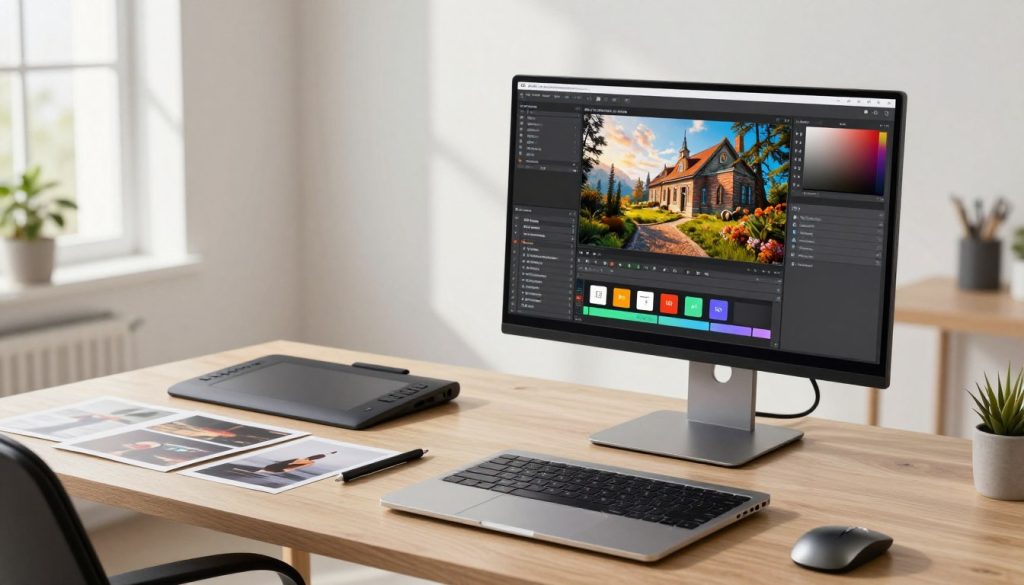
Topaz Video AI is a top choice for creators. It’s known for being easy to use and delivering great results. It offers different plans, including monthly and yearly options starting at $69/mo.
The Pro version has pro-exclusive models for advanced users. These models give you more control over your 8k upscaling work. This ensures your projects look consistent, no matter the source material.
Using Stable Diffusion for Super-Resolution
Stable Diffusion is for those who want detailed control. It uses custom checkpoints and ControlNet to enhance details. This is great for scenes with complex textures.
It’s a bit harder to learn, but it’s perfect for those who need exacting results. The ability to tweak the 8k upscaling process is a big plus for power users.
Comparing Real-ESRGAN and Custom Models
Real-ESRGAN is a great option for developers and hobbyists. It’s open-source and can be used in custom projects. This makes it a cost-effective way to get professional results.
When deciding between Real-ESRGAN and commercial software, think about these points:
- Real-ESRGAN: Great for custom projects and no cost.
- Commercial Suites: Ideal for easy workflows and support.
- Custom Models: Best for unique looks that standard tools can’t achieve.
Your choice depends on what you value more. Do you prefer the ease of commercial software or the flexibility of open-source? Both can lead to amazing 8k upscaling results with the right settings.
Step One: Initial Upscaling and Noise Removal
Starting with 8k ai porn upscaling needs a good setup. Make sure your computer and software can handle high-resolution files. This helps avoid errors and keeps your work quality high.
Configuring Input Settings for Maximum Clarity
First, set your input settings to match your source files’ resolution. Check that your frame rate and color settings are right. This step helps the AI work better and avoid mistakes.
Applying Denoising Filters to Raw Renders
Raw renders often have digital noise. A light denoising filter helps the AI start with a clean slate. It’s important to remove noise without losing important details.
Managing VRAM Usage During Batch Processing
Processing many files at once can use up too much GPU memory. Adjusting batch sizes or using memory-saving features can help. Keep an eye on your system’s resources to prevent crashes during 8k ai porn upscaling.
| Project Scale | VRAM Allocation | Batch Size | Processing Speed |
|---|---|---|---|
| Small (Short Clips) | 4GB – 6GB | 1-2 Files | Fast |
| Medium (Full Scenes) | 8GB – 12GB | 3-5 Files | Moderate |
| Large (Feature Length) | 16GB+ | 6+ Files | Optimized |
Step Two: Enhancing Skin Texture and Fine Details
After the first steps, focus on making skin look real. AI does great at making things clearer, but it misses the small details of human skin. Refining these details makes a big difference between a fake and a real video.
Utilizing Face Recovery Tools
Face recovery tools help avoid the “uncanny valley” effect. They find facial features and swap low-quality AI for better textures. This keeps the face looking natural and human.
- Prioritize eye clarity to maintain engagement.
- Use mask-based blending to integrate recovered faces seamlessly.
- Adjust the strength of the recovery model to match the surrounding skin tone.
Manual Sharpening Techniques for Realistic Results
After AI recovery, manual sharpening may be needed. Avoid global filters that can make things look unnatural. Instead, focus on specific areas like hair, fabric, and skin.
When sharpening, work on a separate layer. This lets you control the effect without harming the image. A light touch is better for a cinematic feel.
Correcting AI-Induced Artifacts
AI can sometimes create strange artifacts. These might look like pixelated patches or unnatural color changes. Use cloning tools and frequency separation to fix these.
If artifacts keep showing up, try reducing the sharpening in those spots. Authenticity comes from keeping texture consistent. Cleaning up these errors makes your video look polished.
Step Three: Color Grading and Final Polish
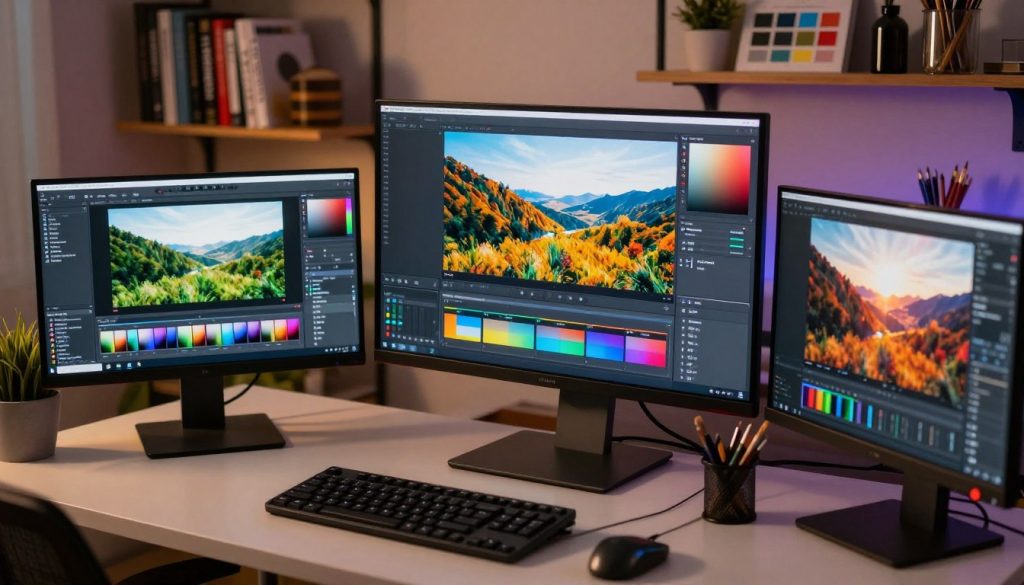
Color grading is key to turning raw AI output into a cinematic masterpiece. It’s the last step before you export your ultra hd export. By adjusting tones, you make sure your footage looks polished and professional.
Matching Color Spaces for Ultra HD Export
High-resolution files need color accuracy. Make sure your project settings match the output color space, like Rec. 2020. This step prevents color issues during ultra hd export.
- Check your monitor calibration before starting.
- Use scopes to monitor luminance levels.
- Ensure your working color space matches your delivery target.
Adjusting Contrast and Saturation for 8K Displays
8K displays show every detail, making color precision crucial. Adjust contrast and saturation carefully to avoid digital banding. Subtle shifts in mid-tones often work better than big changes.
“The goal of color grading is not to change the image, but to enhance the story through light and shadow.”
Keep skin tones natural and enhance the environment’s vibrancy. High pixel density in 8K screens makes small saturation errors stand out. Always check your work on a high-quality monitor to ensure the final look.
Applying Grain for Cinematic Texture
AI upscaling can make footage look too smooth. Adding a touch of film grain brings back a cinematic texture. This technique hides digital artifacts and adds depth to the image.
When adding grain, use a low intensity to keep the 8K resolution clear. You want the grain to feel like part of the film stock, not a digital effect. This final touch makes your content feel real and ready for high-end distribution.
Optimizing for Ultra HD Export and Compression
Your journey toward a perfect 8K video ends with ultra hd export. The final file preparation is key to how your audience sees your work. Setting it up right keeps your high-resolution content looking great on different platforms.
Choosing the Right Codecs for 8K Playback
Choosing the right codec is crucial for keeping 8K quality. The H.265/HEVC codec is the top choice for high-efficiency compression. It supports 8K well. The AV1 codec is also popular for its better compression and open-source status.
Go for these modern codecs to make sure your files work with today’s media players and smart TVs. Older formats can’t handle 8K’s big data needs, leading to playback issues. Make sure your chosen container, like MP4 or MKV, supports your codec for ultra hd export.
Managing Bitrate Settings for High-Resolution Files
Bitrate is the link between file size and quality. If your bitrate is too low, you’ll see compression artifacts that ruin your work. But, a too-high bitrate makes files too big to stream or store.
For 8K, use a variable bitrate (VBR) approach. This lets the encoder use more data for complex scenes and less for simple ones. Find a balance that keeps your work’s cinematic integrity without making files too big.
Testing Playback Performance on Different Hardware
Before you’re done, test your files on different devices. High-resolution files need a lot of power from the CPU and GPU. Older hardware might struggle, leading to playback problems.
Here’s a table to see how different hardware handles your ultra hd export files:
| Hardware Type | Playback Capability | Recommended Bitrate | Performance Impact |
|---|---|---|---|
| High-End PC (RTX 40-series) | Native 8K Smooth | 80-100 Mbps | Minimal |
| Modern Smart TV | Native 8K Smooth | 60-80 Mbps | Moderate |
| Mid-Range Laptop | Software Decoding | 30-50 Mbps | High |
| Mobile Devices | Not Recommended | Below 20 Mbps | Severe |
Testing ensures your viewers see your work in its best quality. Adjust your settings based on hardware limits for a professional ultra hd export every time.
Common Pitfalls and How to Avoid Them
Mastering high-resolution enhancement means avoiding common visual pitfalls. Even with top software, 8k upscaling can have unexpected artifacts if settings are not precise. Catching these issues early helps keep your visuals consistent and high-quality.
Preventing Over-Sharpening and Halo Effects
Applying too much sharpening is a common mistake. It leads to bright, unnatural outlines called halo effects. To avoid this, keep edge enhancement settings moderate and let AI define natural boundaries.
If halos appear, try lowering sharpening filter strength or switching to a model that focuses on natural texture. Consistency is key for a natural look in your final output.
Handling Motion Blur in AI Upscaling
Motion blur confuses AI models, causing ghosting artifacts. This ruins video clarity. To fix this, use motion-compensated models that handle fast sequences better.
Troubleshooting Flickering in Video Sequences
Flickering occurs when AI processes frames unevenly, causing images to jump. This happens when the software lacks temporal stability. To solve this, use a model with strong temporal awareness or apply a light grain overlay to hide minor frame inconsistencies.
| Issue | Primary Cause | Recommended Fix |
|---|---|---|
| Halo Effects | Excessive sharpening | Lower intensity settings |
| Ghosting | Motion blur confusion | Use motion-aware models |
| Flickering | Temporal instability | Enable temporal smoothing |
Conclusion
Mastering the 8K upscaling workflow turns raw renders into top-notch content. You now have the skills to take your projects to new heights in ultra-high-definition.
Success in this field needs patience and precision. Keeping your rendering pipeline consistent ensures every frame is of the highest quality. Your dedication to detail makes your work stand out from the rest.
Tools like Topaz Video AI and Stable Diffusion help you explore new creative limits. By trying out these tools, you can develop your unique style while keeping your work technically sound. Always test new hardware to keep your playback smooth and reliable.
Your quest for perfect 8K resolution is a continuous learning journey. Use these techniques in your future projects to get amazing results. Share your progress with others to help them improve their high-resolution work too.
FAQ
What is the primary benefit of using 8k upscaling for digital content?
8k upscaling uses neural networks to enhance lower-resolution content. It makes your content clear and detailed, matching modern display standards. This ensures your final product looks sharp and professional, not pixelated or blurry.
How do I ensure skin textures remain realistic during the 8k ai porn upscaling process?
Choose AI models trained to recognize human features for realistic skin textures. Tools like Topaz Video AI help identify pores and lines. This way, you can sharpen and reduce noise without losing the natural look of the skin.
What are the pricing options for professional tools like Topaz Studio?
Topaz Studio has different plans to meet various needs, starting at /mo. Topaz Studio Pro offers more control and advanced AI for high-volume work.
How does Real-ESRGAN compare to commercial upscaling software?
Real-ESRGAN is a free, open-source option for those who like command-line interfaces. But, commercial tools like Topaz Labs offer easier use, support, and tools for quick enhancements.
What hardware considerations should I keep in mind for an ultra hd export?
8K video processing requires a strong GPU, like an NVIDIA GeForce RTX 4090. Without the right hardware, you might face slowdowns or crashes during the export process.
How can I prevent over-sharpening and the “halo effect” in my final renders?
Avoid over-sharpening by adjusting “De-blur” and “Sharpen” sliders carefully. It’s better to enhance slightly in AI and then manually sharpen in Adobe Premiere Pro or DaVinci Resolve.
Which codecs are best for managing 8K file sizes and playback?
Use modern codecs like H.265 (HEVC) or AV1 for high-quality exports. They compress well, keeping 8k detail without huge file sizes that are hard to play back.
How do I fix flickering issues in upscaled video sequences?
Flickering comes from AI seeing noise differently in each frame. Use “Proteus” or “Artemis” models in Topaz Video AI for better consistency. Also, clean your raw renders before upscaling to give AI a better starting point.