Storyboard Planning: Pre-Vis for Neural Shoots
Ever wondered why some digital projects seem flawless while others are messy? The answer often starts before filming or coding begins.
Learning ai porn storyboard planning is key to bringing your ideas to life. It lets you control the many details in neural shoots.
Effective pre-visualization is like a map for your team. It helps avoid costly mistakes and keeps everyone on the same page. Spending time on this step turns your ideas into a professional, polished product.
Key Takeaways
- Pre-visualization is essential for maintaining creative control in complex digital projects.
- Early scene mapping prevents costly errors during the production phase.
- A clear visual guide ensures your team remains aligned with the project aesthetic.
- Structured preparation is the hallmark of professional content creation.
- Investing time in the initial phase significantly improves the final output quality.
The Fundamentals of AI Porn Storyboard Planning
Mastering ai porn storyboard planning mixes technical skill with creative vision. You need a clear plan before starting to ensure quality and consistency. Tools like CineVision help adjust your script in real-time, linking your vision to the final product.
Defining Your Creative Vision
Your creative vision guides every choice in production. Having a clear vision early helps set the mood, lighting, and character interactions. This avoids the confusion of aimless prompts.
Key elements to consider in your project include:
- Atmosphere: Choose colors and lighting to set the mood.
- Character Dynamics: Plan how characters interact to keep the story flowing.
- Composition: Pick framing styles to focus on key parts of the scene.
Why Pre-Visualization Matters for Neural Networks
Pre-visualization is crucial for seeing how shots and sequences will look before production. It lets you test ideas without wasting time or resources. This way, you can refine your vision before the neural network starts working.
The advantages are:
- Rapid Iteration: Adjust shots and positions quickly without redoing the whole scene.
- Communication Clarity: Use visual guides to keep a consistent style in complex projects.
- Resource Efficiency: Save on generation cycles by perfecting your creative vision through pre-visualization.
Effective ai porn storyboard planning is about control. By documenting your vision, you turn ideas into a cohesive, professional visual experience.
Developing a Narrative Beat Sheet
Creating a compelling visual story starts long before using an AI generator. Many creators dive into image generation without a plan. This often leads to results that lack cohesion or emotional depth. A beat sheet helps you create a roadmap for your production.
Structuring the Arc of Your Scene
A strong narrative arc is key to any successful project. It makes sure your sequence flows smoothly from start to finish. Without it, your storyboard ai porn project might feel disjointed or confusing.
Breaking your scene into segments helps you control the final output. This method lets you spot where you need to adjust the pace before spending a lot on generation. Make sure to include key elements in your planning:
- Inciting Incident: The moment that starts the main action.
- Rising Action: The part where tension or intensity grows.
- Climax: The highest emotional or physical point of the scene.
- Resolution: The final state of the characters and setting.
Mapping Emotional Transitions
It’s just as crucial to track your characters’ feelings as their actions. A detailed beat sheet helps you see these emotional shifts. By mapping these changes, you make sure every frame has a purpose in your narrative arc.
This careful planning is essential for top-notch storyboard ai porn development. By noting your characters’ emotions at each stage, you can improve your prompts. This approach saves time and keeps your audience engaged from start to finish.
Creating a Comprehensive Shot List
Creating a detailed shot list is key to organizing your vision. It keeps your production smooth and avoids the mess of disjointed visuals. It gives your storyboard ai porn pipeline a clear path to follow.
“Failing to plan is planning to fail.”
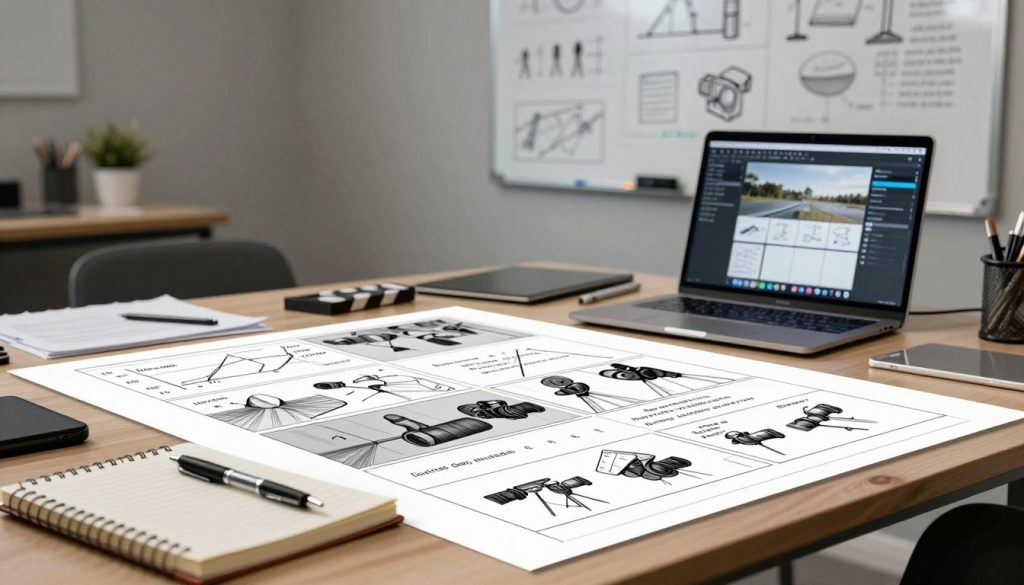
A good shot list outlines the shot type, camera position, lens, and movement. These details ensure no important action is overlooked. By setting these early, you keep control over the final product.
Categorizing Camera Angles and Framing
To get a cinematic feel, sort your camera angles and framing. Decide if a scene needs a wide shot or a close-up to highlight emotions. Consistent framing helps the viewer grasp the scene’s space.
Think about how lens choice affects your view. Wide-angle lenses make spaces seem bigger, while telephoto lenses bring the background closer. Recording these choices in your shot list ensures your project looks consistent.
Defining Character Positioning and Interaction
It’s crucial to plan character positions for a cohesive story. Map out where each character is in relation to others and the setting. This prevents AI from creating confusing or impossible scenes.
Pay attention to how characters move together. Clear planning of camera angles and character placement is vital for top-notch visual storytelling.
Visualizing Scenes with AI Image Generators
Turning your creative vision into reality needs the right digital tools. Modern AI image generators are key for creating a professional storyboard. This guides your whole production process.
Selecting the Right Tools for Concept Art
Picking the right software keeps your visual assets top-notch and useful. Each platform has its own strengths for different stages of your pre-visualization workflow.
Using Midjourney for Character Consistency
Midjourney is great at keeping your characters looking the same across frames. You can tweak facial features like age, gender, and expression to fit your story perfectly.
- Keep character features consistent under different lights.
- Apply specific cosmetic styles for uniform look.
- Make high-quality portraits for your team’s reference.
Leveraging Stable Diffusion for Specific Poses
For scenes needing exact body language or complex interactions, Stable Diffusion is your go-to. It lets you control character positioning, crucial for detailed scenes.
With specialized models, you can get specific poses that standard prompts can’t. This ensures your storyboard accurately shows your scene’s physical details.
Refining Prompts for Storyboard Accuracy
Good prompt engineering is key to moving from a rough idea to a polished frame. Be clear about your camera angles and framing to help the AI get your spatial needs.
Here are tips to boost your output accuracy:
- Specify the focal length for real-world cinematic lenses.
- Clearly state the distance between the subject and camera.
- Use technical terms for lighting and environment.
By refining your prompts, you cut down on errors and save time. Consistent improvement leads to a more professional and reliable outcome for your project.
Maintaining Character Consistency Across Frames
Creating visual harmony in AI projects needs a careful approach to keeping characters stable. AI image generators often show small changes in faces or body shapes between frames. This can ruin the story’s feel if not handled right.
To keep character consistency, you can’t just tweak prompts. A detailed technical plan helps your main character stay the same from start to end. This skill makes your work look professional, not amateur.
Utilizing LoRA and ControlNet for Stability
Using LoRA models is key to keeping character traits the same. Training a custom LoRA on your character helps the model stay true to your vision. This method greatly lowers the chance of unwanted changes.
Adding ControlNet to your workflow is also crucial. It lets you control the pose and setting of your character, keeping movements smooth. Together, LoRA and ControlNet ensure your work looks top-notch:
- LoRA training: Gives your character a consistent look.
- ControlNet poses: Keeps your character in the right spot for different views.
- Seed locking: Helps keep small details the same in scene variations.
Managing Wardrobe and Environment Continuity
It’s not just the character that needs to stay the same. Clothes and settings must also be consistent. Changing outfits too much can pull your audience out of the story. Keep a detailed record of your character’s clothes, including textures and colors, for your prompts.
Environment consistency is just as important. When switching AI image generators, lighting and backgrounds might change. Here’s how to keep things steady:
- Have a master style guide for lighting and colors.
- Use the same background descriptions in every prompt.
- Apply filters to match the color of all frames.
Following these technical rules helps keep your character consistency strong. A consistent look keeps your audience focused on the story, not technical issues.
Technical Workflow for Neural Shoots
Your production efficiency depends on how well you use technical data. This helps keep your creative process smooth and free from technical issues.
Integrating Storyboards into Your Generation Pipeline
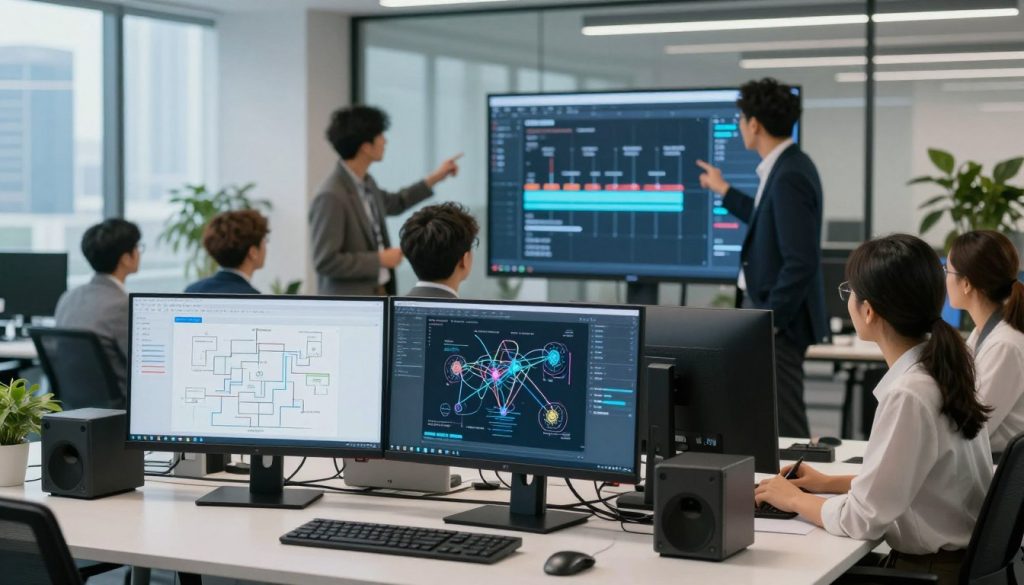
To get professional results, you need to turn your ideas into real data. Techvis is key in making this happen. It changes simple ideas into detailed plans, like camera angles and heights.
Adding this data to your workflow means every shot list item can be done right and safely. This way, you can handle complex scenes better and avoid many changes later.
Managing Resolution and Aspect Ratio Requirements
Setting your technical specs early is key for high production efficiency. Decide on your resolution and aspect ratio before starting your neural shoots. This saves you from expensive re-renders later.
Keeping these settings the same ensures your final products are ready for any platform. By sticking to your shot list and these specs, you support both creativity and technical stability.
Refining the Sequence Through Iterative Testing
Improving your visual story is key to making it stand out. Treat your project as a work in progress. This way, every change feels deliberate and polished. Iterative testing helps you move from basic to professional storytelling.
Analyzing Flow and Pacing
Review your sequence to match the beat sheet rhythm. If a transition is jarring or a shot is too long, adjust it right away. Small timing changes can make a big difference in how your story is seen.
Make sure your visual flow is logical. If the pacing is off, check your beat sheet. This ensures your emotional beats hit the mark. Regular checks on these elements make your project shine.
Adjusting Prompts Based on Visual Feedback
Fixing visual issues means using prompt engineering. If a character looks off, tweak your tags for character consistency. This might take a few tries to get right.
Don’t hesitate to toss frames that don’t meet your standards. Precise visual feedback helps refine your prompt engineering. This ensures your final video looks cohesive and polished.
Best Practices for Professional Pre-Vis Results
Professional creators know that great visual storytelling starts with good planning. A systematic pre-visualization approach helps avoid mistakes and saves time. This ensures your vision stays clear from start to finish.
Organizing Your Assets for Efficient Production
Good asset management is crucial for any project. Create a clear folder structure for concept art, character models, and backgrounds. Use easy-to-understand names so you can find files quickly.
Cloud-based storage is great for keeping your work accessible. Consistency is key for complex projects. An organized library helps your skills grow.
Documenting Your Workflow for Future Projects
Keeping a record of your process is vital. Log your successful prompts and settings for future visual storytelling tasks. Your workflow log should be a collection of your best methods.
Tracking your progress helps you find what works best. This turns past experiences into a guide for future success. See how a structured approach improves your efficiency in the table below.
| Feature | Disorganized Workflow | Professional Workflow |
|---|---|---|
| Asset Retrieval | Slow and frustrating | Instant and seamless |
| Prompt Consistency | High variance | Standardized library |
| Project Scaling | Difficult to manage | Highly scalable |
| Error Recovery | Time-consuming | Rapid adjustment |
Conclusion
Mastering pre-visualization is key to making your neural shoots look professional. By planning every frame before you start, you have full control over your work. This approach helps you create better content.
A study with 24 participants showed that tools like CineVision help directors and cinematographers work better together. This teamwork makes your production more efficient. You’ll spend less time fixing mistakes and more time perfecting your vision.
Good storytelling starts with solid planning. By documenting your process and organizing your assets early, you keep your story consistent. This avoids the problems that can ruin AI projects.
Use these tips for your next project to see big improvements. You have the tools to turn ideas into stunning sequences. Begin planning your next scene today to unlock your full creative potential.
FAQ
Why is a beat sheet necessary for a storyboard ai porn project?
A beat sheet is essential for your scene’s narrative skeleton. It ensures every transition is planned, keeping your story flowing smoothly.
How does a shot list improve the efficiency of AI generation?
A shot list gives specific instructions for camera angles and character placement. This helps use targeted prompts, saving time and resources.
What are the best tools for maintaining character consistency?
LoRA models and ControlNet are key for consistency. Midjourney’s “Character Reference” feature also helps keep characters consistent across frames.
Can I use Image-to-Image (Img2Img) for storyboarding?
Yes, Image-to-Image is vital for pre-visualization. Use it to ensure your AI-generated frames match your intended composition.
What role does aspect ratio play in the pre-visualization stage?
Aspect ratio is crucial for framing your compositions correctly. It prevents important visual information from being lost during editing.
How do I manage environment continuity in a neural shoot?
Use consistent environment seeds and descriptive tags for lighting and location. Tools like Krea AI help maintain visual style, ensuring a cohesive scene.